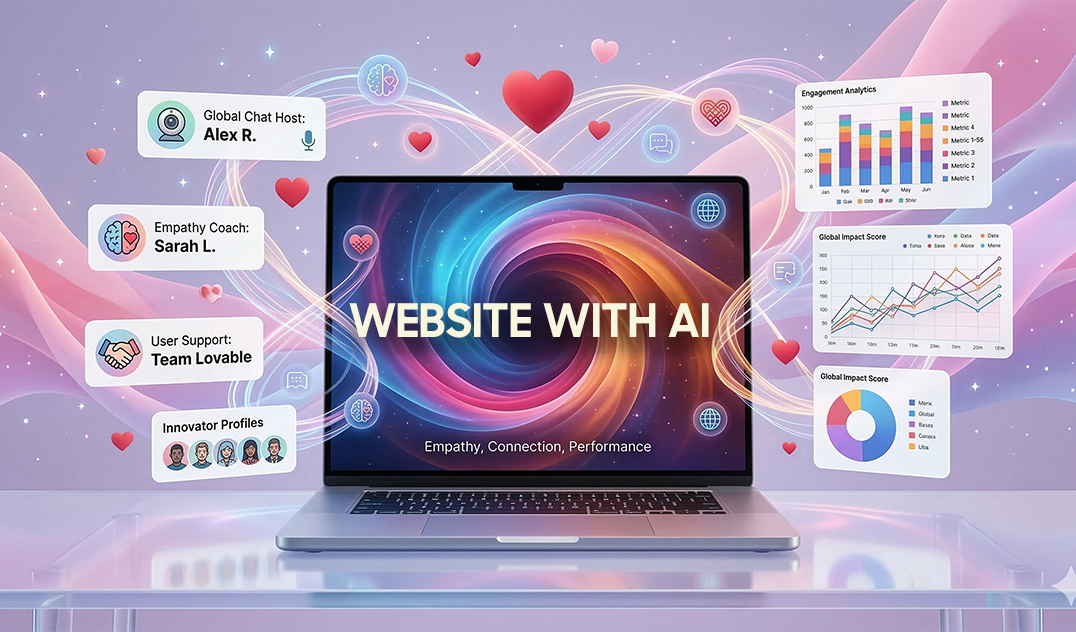
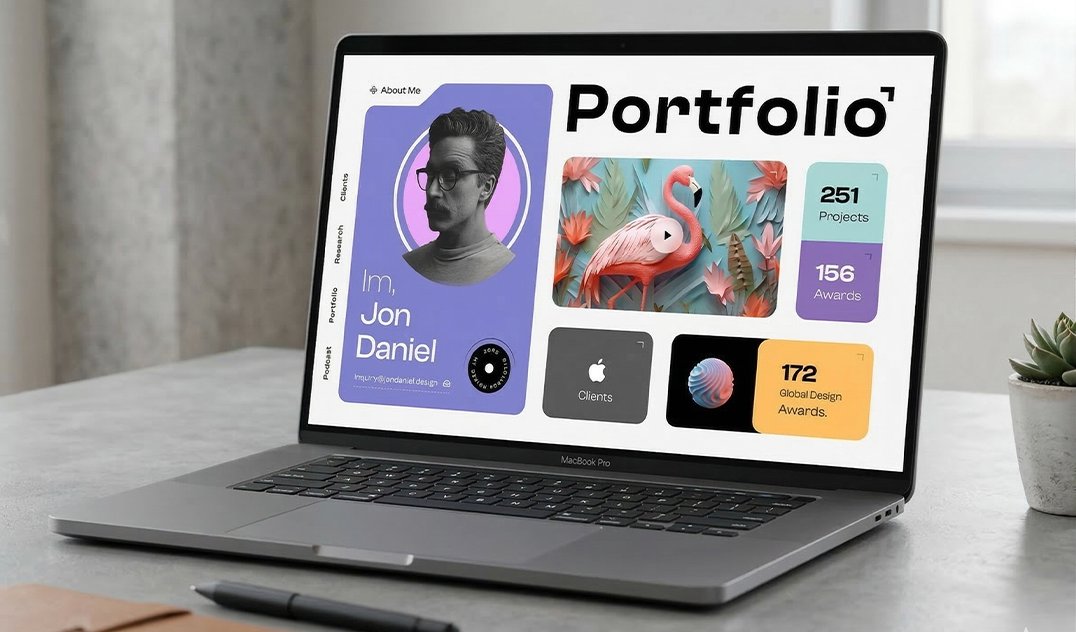
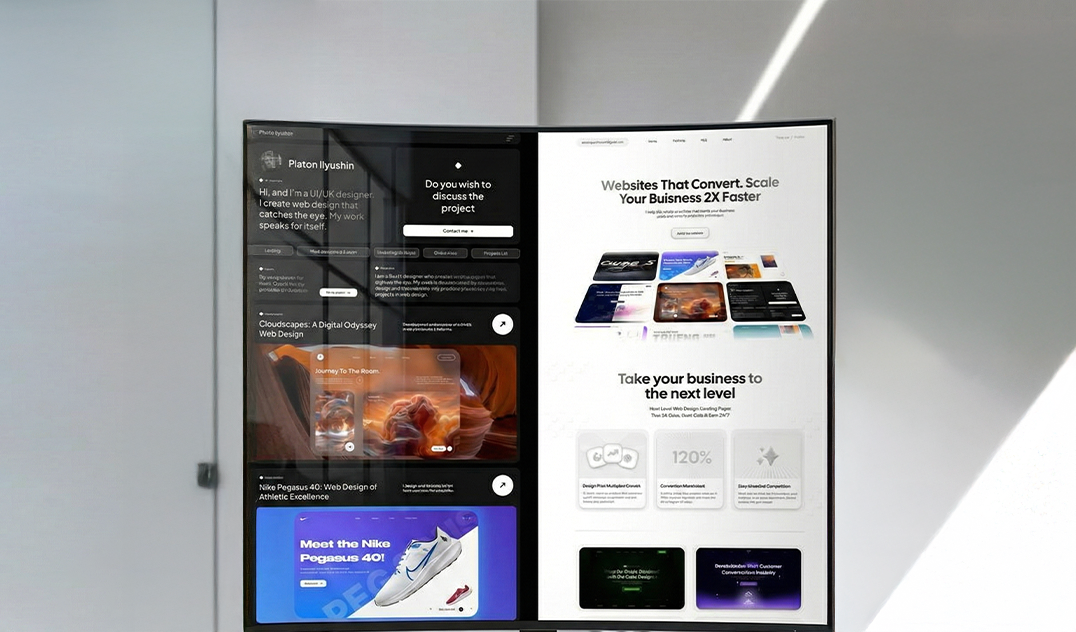
In the early days of the internet, a website was often described as a “digital brochure”, a static collection of pages that provided information but did not interact with the visitors. Those days are long gone. In today’s hyper-competitive digital world, a website should be more than an online placeholder; it should function as a high-performing sales representative, a 24/7 customer support specialist, and a powerful engine for brand growth.
The catalyst behind this transformation is AI web design. By integrating artificial intelligence into the core of web development and strategy, businesses are moving away from traditional “best guess” design towards an intelligent, data-driven marketing engine. AI is enabling a website to stop being a passive tool and
As we look at the future of digital presence, it is clear that AI is no longer just an experimental add-on. It is becoming the essential foundation for any modern brand that wants to turn casual clicks into loyal customers.
What is AI Web Design and Why It Matters for Modern Brands
AI web design refers to the use of artificial intelligence and machine learning algorithms to create, manage, and optimize digital experiences. Unlike traditional web design, which relies on static layouts and periodic manual updates, AI-driven design is dynamic.
Defining the Shift
Traditional web design is often subjective, based on what looks good to a designer or stakeholder. In contrast, data-driven web design uses AI to analyze massive datasets, ranging from heatmaps and click-through rates to scrolling behavior, to determine the most effective structure for a site.
- Behavioral Analysis: AI tools can track how users navigate a site, identifying where they get confused or where they drop off.
- Automated Improvements: Instead of waiting for a quarterly review, AI can suggest or even implement layout adjustments to improve flow.
- Learning Capability: An AI-driven site “learns” from every visitor, refining its understanding of what drives engagement.
For modern brands, this matters because it eliminates the stagnation that plagues many corporate websites. By using AI, your digital storefront can become a living entity that evolves alongside your audience’s preferences.
How AI Web Design Improves Website Performance and User Experience
The primary goal of any website is to provide value to the user. When a site is difficult to navigate or slow to load, the value is lost. How AI improves web design is most evident in performance and user experience (UX).
AI-Powered User Experience
An AI-powered user experience is built on the concept of “anticipatory design.” Rather than making the user search for what they need, the site predicts it.
- Hyper-Personalization: AI analyzes a visitor’s past behavior or referral source to present the most relevant content first.
- Intelligent Content Placement: AI determines the optimal position for headlines, images, and videos based on what has historically captured the most attention.
- Enhanced Accessibility: AI tools can automatically generate alt-text for images, provide real-time language translation, and adjust contrast for visually impaired users, ensuring a premium experience for everyone.
Using AI to Improve Website Performance
Performance isn’t just about “feel”; it’s about technical precision. Using AI to improve website performance involves:
- Speed Optimization: AI-driven image compression ensures high-quality visuals without the heavy load times.
- Real-Time Error Detection: AI bots can continuously crawl a site to detect broken links or code bugs before a user ever sees them.
- Responsive Automation: AI ensures that whether a user is on a high-end desktop or a budget smartphone, the layout adapts perfectly to their specific hardware constraints.
Benefits of AI Web Design for Businesses
Investing in AI-driven solutions can provide a significant competitive advantage. The benefits of AI in website design extend far beyond aesthetics, impacting the organization’s bottom line.
- Accelerated Development: AI can handle repetitive coding tasks and generate initial layouts, allowing human designers to focus on high-level strategy and creative storytelling.
- Cost Efficiency: By automating testing and performance monitoring, businesses reduce the need for constant manual intervention and expensive “fix-it” projects.
- Automated SEO: AI tools can analyze search trends in real time, suggesting content optimizations and meta tag adjustments to help the site stay at the top of search engine results pages (SERPs).
- Scalability: As a business grows, AI can manage the increasing complexity of a site, from localized content for different regions to managing thousands of product SKUs in an e-commerce environment.
Most importantly, data-driven web design can remove the guesswork. Every decision from the color of a button to the length of a form is backed by evidence, significantly improving the Return on Investment (ROI) of the digital presence.
AI Website Personalization: Delivering Unique Experiences for Every Visitor
Generic experience can lead to generic results. AI website personalization is the process of creating a unique digital journey for every individual visitor.
How It Works
AI can identify patterns in visitor behavior, such as time spent on specific pages, geographic location, and previous interactions, which can be used to tailor the interface.
- Dynamic Landing Pages: If a user arrives from a LinkedIn ad for B2B services, the AI can prioritize case studies and professional white papers. If they arrive via Instagram, it might highlight visual portfolios or lifestyle content.
- Personalized Offers: Instead of showing a universal discount code, the site can offer a “Welcome Back” incentive to returning users or a “First-Time Buyer” guide to new ones.
- Predictive Recommendations: Much like Netflix or Amazon, an AI-optimized website can suggest “The Next Best Action” for a user, keeping them engaged for longer.
When a visitor feels that a website “understands” their needs and requirements, trust is built instantly. This personalized touch is a key driver in increasing engagement and long-term brand loyalty.
How AI Web Design Can Increase Website Conversions
Ultimately, a website’s success is measured by its ability to convert. How AI can increase website conversions is through a combination of psychology and precision.
- Optimizing CTA Placement: AI heatmaps reveal exactly where a user’s eyes land. By placing “Call to Action” buttons in these high-interest zones, conversion rates naturally climb.
- AI Chatbots for Lead Gen: Intelligent bots can qualify leads in real time, answer common questions, and book meetings while the human team is offline.
- Automated A/B Testing: Traditional A/B testing can take weeks. AI can run hundreds of variations simultaneously, quickly identifying the winning combination of copy and imagery.
- Behavior-Based Funnels: If the AI detects a user is about to “bounce” (leave the site), it can trigger a targeted exit-intent popup or a specific offer to keep them in the conversion funnel.
By treating every visitor interaction as a data point, AI helps businesses turn cold traffic into warm leads and, eventually, paying customers.
How Moonbox Uses AI Web Design to Build High-Performing Websites
At Moonbox, we build intelligent growth engines and not just websites. As the best digital agency in Dubai, we have integrated AI into every stage of our web design process to ensure our clients stay ahead of the curve.
Our Data-Driven Strategy
We begin every project by looking at the numbers. Moonbox utilizes AI to analyze industry trends, competitor movements, and existing user behavior. This will allow us to build a data-driven web design strategy that is not just beautiful but strategic.
AI-Powered User Experience Optimization
We implement advanced tracking and AI UX analysis to see how users interact with your brand. Our team uses these insights to automate layout optimization, ensuring the AI-powered user experience we deliver is frictionless and intuitive.
AI-Based Personalization
We believe in the power of individuals. Through AI website personalization, Moonbox creates dynamic user experiences where content changes based on who is viewing. From targeted landing pages to personalized messaging, we make sure your message hits home every time.
Conversion Optimization with AI
Our goal is your growth. Moonbox uses proprietary AI tools to optimize CTAs, refine conversion funnels, and perform continuous testing. The result is a website that doesn’t just attract visitors, it converts them with surgical precision.
Why Businesses Should Invest in AI Web Design Now
The digital marketplace is becoming increasingly crowded. As users’ expectations rise, tolerance for slow, generic, or confusing websites is at an all-time low. AI web design is no longer a luxury for tech giants; it is a necessity for any business that wants to remain relevant.
Investing in these technologies today means your brand is “future-ready.” You are not just building a site for this year; you are building a system that will continue to learn and grow as technology evolves. Websites are transforming from static pages into automated brand growth engines, and those who adopt early will lead their respective industries.
Turn Your Website into a Brand Growth Engine with AI Web Design
Your website has the potential to be your most valuable asset. By accelerating development cycles, utilizing AI-driven personalization, and optimizing your conversion funnels with intelligent data, you can transform your digital presence into a 24/7 revenue generator.
Don’t settle for a website that just sits there. Build a smarter, high-performing platform that works as hard as you do.
Why settle for guesswork when you can use data-backed AI design to reach your customers? Our team at Moonbox combines creative expertise with advanced AI tools to improve your site’s performance and maximize every click. Let’s transform your website from a digital brochure into a powerful conversion machine.
FAQs
- What is AI web design?
AI web design refers to the use of artificial intelligence and machine learning to create, optimize, and personalize websites. Unlike traditional web design, AI web design analyzes user behavior and adapts layouts, content, and navigation in real time to improve the user experience. By integrating AI-powered tools for automated coding, layout generation, and behavioral analytics, businesses can build websites that are faster, more intuitive, and better optimized for goals such as lead generation, engagement, and online sales. - How does AI improve website performance?
AI improves website performance by automating technical optimizations such as image compression, real-time code monitoring, and predictive server management. These AI-driven processes help websites load faster and remain stable even during traffic spikes. Additionally, AI continuously analyzes user engagement and technical performance, identifying issues instantly and resolving bottlenecks. This ensures websites stay fast, responsive, and optimized for both SEO rankings and user experience. - Can AI increase website conversion rates?
Yes, AI can significantly increase website conversion rates by analyzing visitor behavior and optimizing the user journey. AI tools use predictive analytics and heatmaps to determine the best placement for Call-to-Action (CTA) buttons, content sections, and forms. AI also enables automated A/B testing and personalized triggers, such as showing targeted offers when users are about to leave the website. These intelligent optimizations help convert more visitors into leads and customers. - Is AI web design suitable for small businesses?
Yes, AI web design is highly suitable for small businesses because it provides advanced automation and data-driven insights without requiring large technical teams. Small brands can use AI tools to deliver a personalized, professional user experience comparable to that of large enterprises. AI-powered platforms also automate SEO, performance monitoring, and user personalization, allowing small businesses to focus on growth while their websites continuously optimize for better visibility and conversions. - How can businesses implement AI website personalization?
Businesses can implement AI website personalization by using tools that analyze visitor data, such as browsing behavior, location, and referral sources. This allows the website to dynamically adjust content, product recommendations, and messaging for each user. By integrating AI-driven personalization systems, businesses can deliver smart content experiences where first-time visitors see brand introductions while returning users receive tailored offers, improving engagement and conversion rates.