Jun 26, 2026
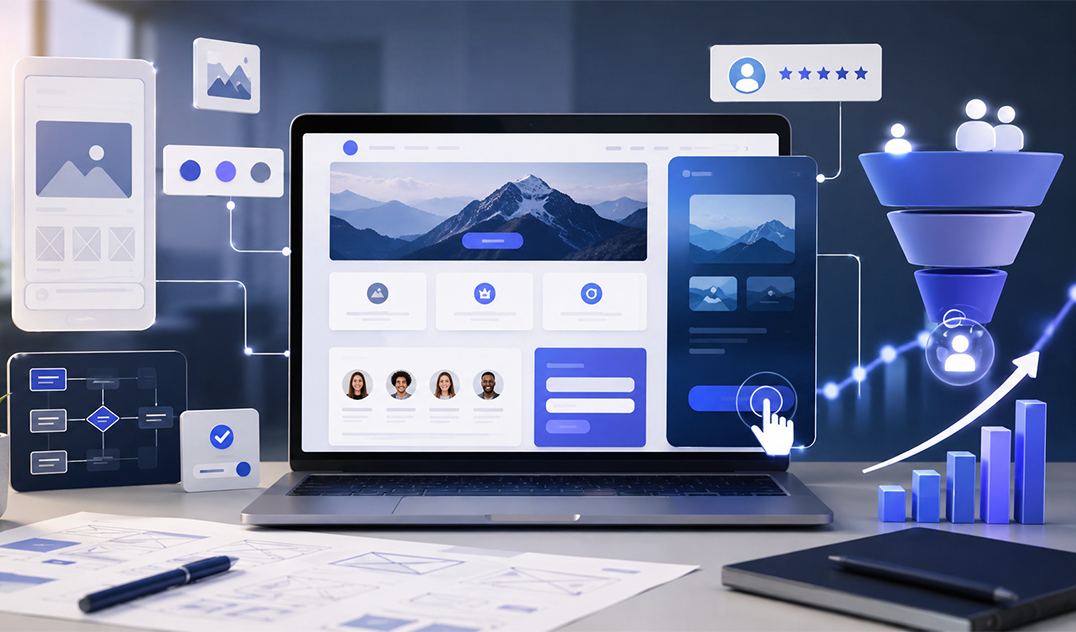
Dubai is a hyper-competitive digital marketplace, and securing traffic is only half the battle. Businesses across the UAE are now investing millions in aggressive search engine marketing, paid social campaigns, and high-level SEO strategies. Yet a common and frustrating challenge is that thousands of highly qualified visitors land on a page, only to exit within seconds without leaving a trace.
When your digital marketing campaigns are performing well, but your sales pipeline remains stagnant, the issue rarely lies in your marketing budget. It is in your digital storefront.
First impressions are made in less than 50 milliseconds. Within this, a user decides if your business is trustworthy, modern, and capable of solving their problems. If your customers expect a premium, easy experience, a beautiful design by itself is no longer enough. Aesthetic appeal without strategic functionality is a missed business opportunity.
True digital success depends on a website UI/UX that guides visitors naturally from initial curiosity to final conversion. This is where a data-driven website UI/UX framework changes the game. By transforming your platform from a simple informational brochure into a highly performing revenue engine, intentional design stops leakage in your sales pipeline and dramatically increases your bottom line.
To use design as a commercial asset, business owners should look beyond creative buzzwords and understand how its two core components function as a unified engine for growth.
When these two disciplines work together, they can establish a direct path to conversion. High-performing user experience design UAE protocols don’t just organize information; they can build brand confidence, improve mobile usability, and create an effortless conversion flow that turns passive browsing into active purchasing.
Every element of your interface either steers a customer closer to a transaction or pushes them toward a competitor. When an experienced UX design company in Dubai optimizes your interface, they systematically remove friction across key stages of the conversion funnel.
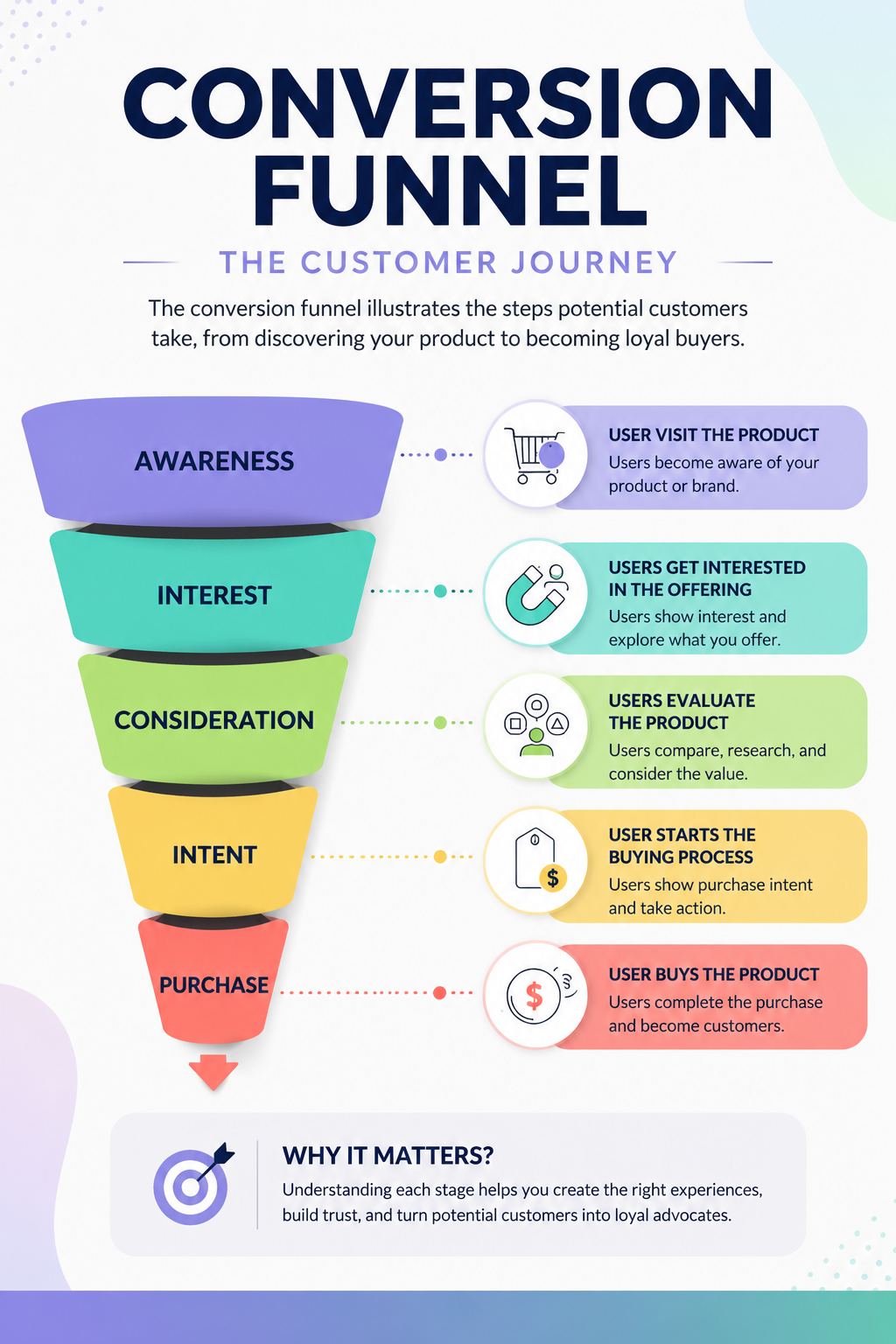
A confusing menu or an ambiguous site structure can force users to think too hard. If a B2B decision-maker or an e-commerce shopper cannot find your services, pricing, or contact information within 2 clicks, they will bounce. Clean visual hierarchy and intuitive layouts eliminate this cognitive overload. By mapping out a logical path, you ensure that high-intent buyers find exactly what they need immediately, accelerating their journey from discovery to checkout.
The UAE has one of the highest smartphone penetration rates globally. In Dubai, a massive portion of web traffic originates from mobile devices. If your platform is not explicitly optimized for thumb-driven navigation, responsive scaling, and rapid mobile execution, you are losing more than half of your potential market. A mobile-friendly website design in Dubai layout ensures that forms are easy to fill out on small screens, touch targets are perfectly sized, and graphics render beautifully on any device.
A call-to-action button should never be in sync with the background. Strategic UI design utilizes color contrast, isolation padding, and psychological directional cues to draw the human eye naturally toward key micro-conversion, such as form submissions, quote inquiries, or direct purchases. The positioning, size, and micro-copy of your CTAs dictate how effectively you convert traffic into measurable leads.
User experience is deeply tied to technical performance. As loading times increase from 1 second to 3 seconds, bounce rates spike dramatically. Modern front-end UI construction cleans up heavy legacy code, optimizes media files, and utilizes layout practices that prevent shifting during rendering. Balancing striking visual assets with light, fast performance keeps your audience engaged.
A broken layout, misaligned text, or an inconsistent brand identity can signal a lack of professionalism. Conversely, a clean grid system, high-quality typography, and tactical integration of social proof, such as testimonials, case study highlights, and secure checkout trust badges, reassure your visitors. When your website feels premium, that quality is directly associated with your physical products or services.
The layout and format of your content determine how long visitors stick around. By formatting text with ample whitespace, scannable subheadings, and engaging micro-interactions (such as subtle hover effects), you turn intimidating blocks of text into an enjoyable reading experience. Higher time-on-site metrics signal interest, warm up leads, and prepare them to take action.
Conversion Matrix: According to recent research, a well-engineered user interface can raise a website’s conversion rate by up to 200%. In comparison, a highly optimized UX design can yield conversion spikes of up to 400%. For a business generating AED 100,000 in digital revenue monthly, that shift represents a monumental leap in profitability without spending an additional dirham on ads.
Many brands unknowingly sabotage their own digital campaigns by falling into common design traps. If you notice your conversion rates dipping, audit your platform for these critical friction points:
Many brands unknowingly sabotage their own digital campaigns by falling into common design traps. If you notice your conversion rates dipping, audit your platform for these critical friction points:
If your platform suffers from these friction points, it’s time to consult with an expert agency to discuss a strategic website redesign plan for Dubai to recover lost revenue.
Operating in Dubai requires a specialized digital strategy. The local commercial ecosystem is distinct, driven by high consumer expectations and a deeply ingrained appreciation for world-class luxury and seamless service.
Consumers in the UAE interact daily with premium global brands, setting their expectations incredibly high. Whether they are booking an elite real estate consultation, ordering gourmet catering, or sourcing enterprise B2B logistics, they expect an interface that is fast, sleek, and intuitive.
Furthermore, Dubai is a diverse, multicultural hub. Your digital platform must communicate effectively across demographics. This requires sophisticated multilingual accessibility, particularly seamless Right-to-Left (RTL) mirror layouts for Arabic audiences. A premium interface accounts for these cultural and linguistic nuances, ensuring that the user experience feels natural and elite in every language.
A beautiful user journey doesn’t just convert the users on your site; it actively helps new ones find you. Search engines like Google prioritize user engagement metrics within their ranking algorithms.
Google’s Core Web Vitals measure real-world user experience, focusing on loading speeds, visual stability, and interactivity. If your platform has high bounce rates and low dwell times due to a frustrating user interface, search engines will interpret your site as low-value, which will lower your organic rankings.
The Digital Marketing Cascade: When your organic search rankings drop, your paid advertising costs rise. If your Google Ads or Meta campaigns direct high-cost traffic to a confusing landing page, your cost-per-acquisition (CPA) skyrockets. By investing in professional UI/UX services in Dubai, you build a cohesive foundation that boosts your search engine rankings, maximizes your paid ad budgets, and improves your overall return on ad spend (ROAS).
Design is a core business strategy, not an afterthought. Partnering with an established team allows you to make decisions based on clear behavioral data rather than guesswork. Our approach combines behavioral analytics with conversion-focused web design to maximize lead generation
A professional agency conducts comprehensive user behavior analysis, leveraging heatmaps, scroll-depth tracking, and user testing sessions to uncover exactly where visitors get stuck. By identifying these hidden bottlenecks, designers restructure their conversion funnels, refine product pages, and maximize customer retention.
This analytical approach ensures that your platform is built to scale alongside your evolving business goals, yielding a highly predictable return on your initial marketing investments.
Consider a prominent corporate real estate agency in Downtown Dubai that was investing over AED 40,000 per month in targeted search campaigns. While traffic to their landing pages was high, their monthly consultation bookings remained remarkably low.
An in-depth behavioral audit revealed three primary points of friction:
The agency implemented a comprehensive, conversion-focused UX strategy for business growth. They compressed their data fields into a smart, three-step micro-form, applied high-contrast visual cues to their primary CTAs, and optimized their media assets for under-two-second load times.
Within sixty days of launching the redesigned platform, the business saw a 140% increase in qualified inbound inquiries without increasing its advertising spend.
Your Website UI/UX should function as your hardest-working sales asset, converting visitors into loyal customers around the clock. If your current platform isn’t delivering the growth you expect, it’s time to elevate your design strategy.
At Moonbox, we specialize in crafting custom, high-conversion digital experiences tailored for the unique dynamics of the Dubai market. Moving beyond generic templates, our expert team combines advanced user psychology, clean aesthetics, and flawless technical architecture to build platforms that truly perform.
Whether you need a comprehensive website redesign, a refined branding strategy, or a mobile-optimized platform that stands out in the UAE, Moonbox provides the specialized expertise to scale your brand.
Ready to transform your digital platform into a high-performing conversion engine? Connect with the Moonbox team today for a tailored UX/UI audit.