Categories
Blogs

How AI and Web Design Together Can Turn Websites into Brand Growth Engines

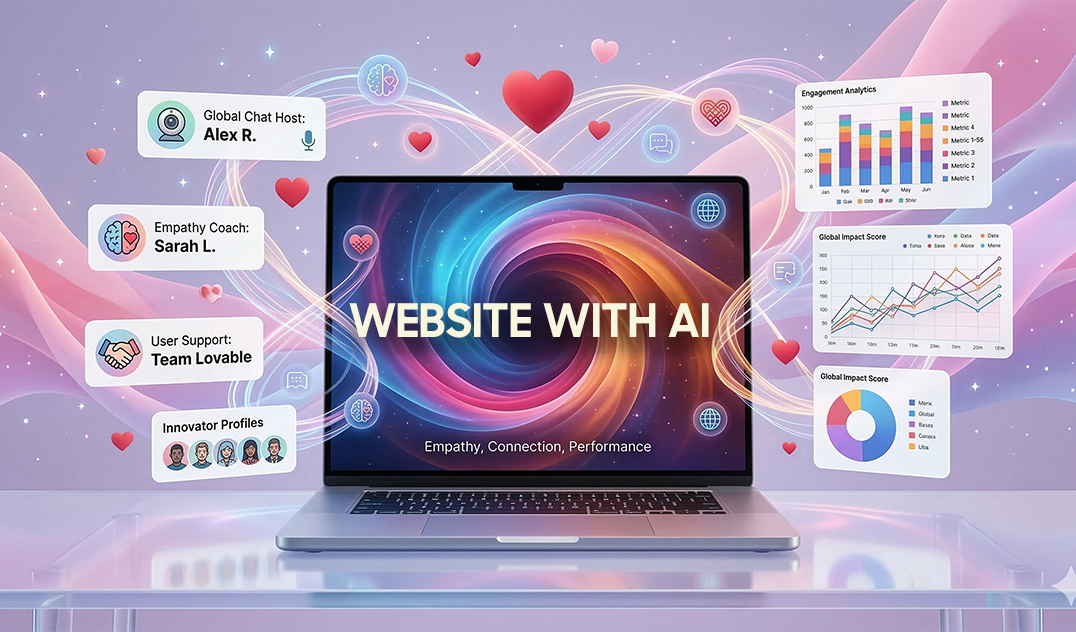
In the early days of the internet, a website was often described as a “digital brochure”, a static collection of pages that provided information but did not interact with the visitors. Those days are long gone. In today’s hyper-competitive digital world, a website should be more than an online placeholder; it should function as a high-performing sales representative, a 24/7 customer support specialist, and a powerful engine for brand growth. 

The catalyst behind this transformation is AI web design. By integrating artificial intelligence into the core of web development and strategy, businesses are moving away from traditional “best guess” design towards an intelligent, data-driven marketing engine. AI is enabling a website to stop being a passive tool and 

As we look at the future of digital presence, it is clear that AI is no longer just an experimental add-on. It is becoming the essential foundation for any modern brand that wants to turn casual clicks into loyal customers.

What is AI Web Design and Why It Matters for Modern Brands

AI web design refers to the use of artificial intelligence and machine learning algorithms to create, manage, and optimize digital experiences. Unlike traditional web design, which relies on static layouts and periodic manual updates, AI-driven design is dynamic. 

Defining the Shift

Traditional web design is often subjective, based on what looks good to a designer or stakeholder. In contrast, data-driven web design uses AI to analyze massive datasets, ranging from heatmaps and click-through rates to scrolling behavior, to determine the most effective structure for a site. 

  • Behavioral Analysis: AI tools can track how users navigate a site, identifying where they get confused or where they drop off.
  • Automated Improvements: Instead of waiting for a quarterly review, AI can suggest or even implement layout adjustments to improve flow.
  • Learning Capability: An AI-driven site “learns” from every visitor, refining its understanding of what drives engagement.

For modern brands, this matters because it eliminates the stagnation that plagues many corporate websites. By using AI, your digital storefront can become a living entity that evolves alongside your audience’s preferences. 

How AI Web Design Improves Website Performance and User Experience

The primary goal of any website is to provide value to the user. When a site is difficult to navigate or slow to load, the value is lost. How AI improves web design is most evident in performance and user experience (UX). 

AI-Powered User Experience

An AI-powered user experience is built on the concept of “anticipatory design.” Rather than making the user search for what they need, the site predicts it.

  • Hyper-Personalization: AI analyzes a visitor’s past behavior or referral source to present the most relevant content first.
  • Intelligent Content Placement: AI determines the optimal position for headlines, images, and videos based on what has historically captured the most attention.
  • Enhanced Accessibility: AI tools can automatically generate alt-text for images, provide real-time language translation, and adjust contrast for visually impaired users, ensuring a premium experience for everyone.

Using AI to Improve Website Performance

Performance isn’t just about “feel”; it’s about technical precision. Using AI to improve website performance involves:

  • Speed Optimization: AI-driven image compression ensures high-quality visuals without the heavy load times.
  • Real-Time Error Detection: AI bots can continuously crawl a site to detect broken links or code bugs before a user ever sees them.
  • Responsive Automation: AI ensures that whether a user is on a high-end desktop or a budget smartphone, the layout adapts perfectly to their specific hardware constraints.

Benefits of AI Web Design for Businesses

Investing in AI-driven solutions can provide a significant competitive advantage. The benefits of AI in website design extend far beyond aesthetics, impacting the organization’s bottom line. 

  • Accelerated Development: AI can handle repetitive coding tasks and generate initial layouts, allowing human designers to focus on high-level strategy and creative storytelling.
  • Cost Efficiency: By automating testing and performance monitoring, businesses reduce the need for constant manual intervention and expensive “fix-it” projects.
  • Automated SEO: AI tools can analyze search trends in real time, suggesting content optimizations and meta tag adjustments to help the site stay at the top of search engine results pages (SERPs).
  • Scalability: As a business grows, AI can manage the increasing complexity of a site, from localized content for different regions to managing thousands of product SKUs in an e-commerce environment.

Most importantly, data-driven web design can remove the guesswork. Every decision from the color of a button to the length of a form is backed by evidence, significantly improving the Return on Investment (ROI) of the digital presence. 

AI Website Personalization: Delivering Unique Experiences for Every Visitor

Generic experience can lead to generic results. AI website personalization is the process of creating a unique digital journey for every individual visitor. 

How It Works

AI can identify patterns in visitor behavior, such as time spent on specific pages, geographic location, and previous interactions, which can be used to tailor the interface. 

  • Dynamic Landing Pages: If a user arrives from a LinkedIn ad for B2B services, the AI can prioritize case studies and professional white papers. If they arrive via Instagram, it might highlight visual portfolios or lifestyle content.
  • Personalized Offers: Instead of showing a universal discount code, the site can offer a “Welcome Back” incentive to returning users or a “First-Time Buyer” guide to new ones.
  • Predictive Recommendations: Much like Netflix or Amazon, an AI-optimized website can suggest “The Next Best Action” for a user, keeping them engaged for longer.

When a visitor feels that a website “understands” their needs and requirements, trust is built instantly. This personalized touch is a key driver in increasing engagement and long-term brand loyalty. 

How AI Web Design Can Increase Website Conversions

Ultimately, a website’s success is measured by its ability to convert. How AI can increase website conversions is through a combination of psychology and precision.

  • Optimizing CTA Placement: AI heatmaps reveal exactly where a user’s eyes land. By placing “Call to Action” buttons in these high-interest zones, conversion rates naturally climb.
  • AI Chatbots for Lead Gen: Intelligent bots can qualify leads in real time, answer common questions, and book meetings while the human team is offline.
  • Automated A/B Testing: Traditional A/B testing can take weeks. AI can run hundreds of variations simultaneously, quickly identifying the winning combination of copy and imagery.
  • Behavior-Based Funnels: If the AI detects a user is about to “bounce” (leave the site), it can trigger a targeted exit-intent popup or a specific offer to keep them in the conversion funnel.

By treating every visitor interaction as a data point, AI helps businesses turn cold traffic into warm leads and, eventually, paying customers.

How Moonbox Uses AI Web Design to Build High-Performing Websites

At Moonbox, we build intelligent growth engines and not just websites. As the best digital agency in Dubai, we have integrated AI into every stage of our web design process to ensure our clients stay ahead of the curve. 

Our Data-Driven Strategy

We begin every project by looking at the numbers. Moonbox utilizes AI to analyze industry trends, competitor movements, and existing user behavior. This will allow us to build a data-driven web design strategy that is not just beautiful but strategic. 

AI-Powered User Experience Optimization

We implement advanced tracking and AI UX analysis to see how users interact with your brand. Our team uses these insights to automate layout optimization, ensuring the AI-powered user experience we deliver is frictionless and intuitive.

AI-Based Personalization

We believe in the power of individuals. Through AI website personalization, Moonbox creates dynamic user experiences where content changes based on who is viewing. From targeted landing pages to personalized messaging, we make sure your message hits home every time. 

Conversion Optimization with AI

Our goal is your growth. Moonbox uses proprietary AI tools to optimize CTAs, refine conversion funnels, and perform continuous testing. The result is a website that doesn’t just attract visitors, it converts them with surgical precision. 

Why Businesses Should Invest in AI Web Design Now

The digital marketplace is becoming increasingly crowded. As users’ expectations rise, tolerance for slow, generic, or confusing websites is at an all-time low. AI web design is no longer a luxury for tech giants; it is a necessity for any business that wants to remain relevant. 

Investing in these technologies today means your brand is “future-ready.” You are not just building a site for this year; you are building a system that will continue to learn and grow as technology evolves. Websites are transforming from static pages into automated brand growth engines, and those who adopt early will lead their respective industries. 

Turn Your Website into a Brand Growth Engine with AI Web Design

Your website has the potential to be your most valuable asset. By accelerating development cycles, utilizing AI-driven personalization, and optimizing your conversion funnels with intelligent data, you can transform your digital presence into a 24/7 revenue generator. 

Don’t settle for a website that just sits there. Build a smarter, high-performing platform that works as hard as you do.

Why settle for guesswork when you can use data-backed AI design to reach your customers? Our team at Moonbox combines creative expertise with advanced AI tools to improve your site’s performance and maximize every click. Let’s transform your website from a digital brochure into a powerful conversion machine.

FAQs

  1. What is AI web design?
    AI web design refers to the use of artificial intelligence and machine learning to create, optimize, and personalize websites. Unlike traditional web design, AI web design analyzes user behavior and adapts layouts, content, and navigation in real time to improve the user experience. By integrating AI-powered tools for automated coding, layout generation, and behavioral analytics, businesses can build websites that are faster, more intuitive, and better optimized for goals such as lead generation, engagement, and online sales.

  2. How does AI improve website performance?
    AI improves website performance by automating technical optimizations such as image compression, real-time code monitoring, and predictive server management. These AI-driven processes help websites load faster and remain stable even during traffic spikes. Additionally, AI continuously analyzes user engagement and technical performance, identifying issues instantly and resolving bottlenecks. This ensures websites stay fast, responsive, and optimized for both SEO rankings and user experience.

  3. Can AI increase website conversion rates?
    Yes, AI can significantly increase website conversion rates by analyzing visitor behavior and optimizing the user journey. AI tools use predictive analytics and heatmaps to determine the best placement for Call-to-Action (CTA) buttons, content sections, and forms. AI also enables automated A/B testing and personalized triggers, such as showing targeted offers when users are about to leave the website. These intelligent optimizations help convert more visitors into leads and customers.

  4. Is AI web design suitable for small businesses?
    Yes, AI web design is highly suitable for small businesses because it provides advanced automation and data-driven insights without requiring large technical teams. Small brands can use AI tools to deliver a personalized, professional user experience comparable to that of large enterprises. AI-powered platforms also automate SEO, performance monitoring, and user personalization, allowing small businesses to focus on growth while their websites continuously optimize for better visibility and conversions.

  5. How can businesses implement AI website personalization?
    Businesses can implement AI website personalization by using tools that analyze visitor data, such as browsing behavior, location, and referral sources. This allows the website to dynamically adjust content, product recommendations, and messaging for each user. By integrating AI-driven personalization systems, businesses can deliver smart content experiences where first-time visitors see brand introductions while returning users receive tailored offers, improving engagement and conversion rates.
Categories
Blogs

How a Portfolio Website Can Increase Your Client Inquiries

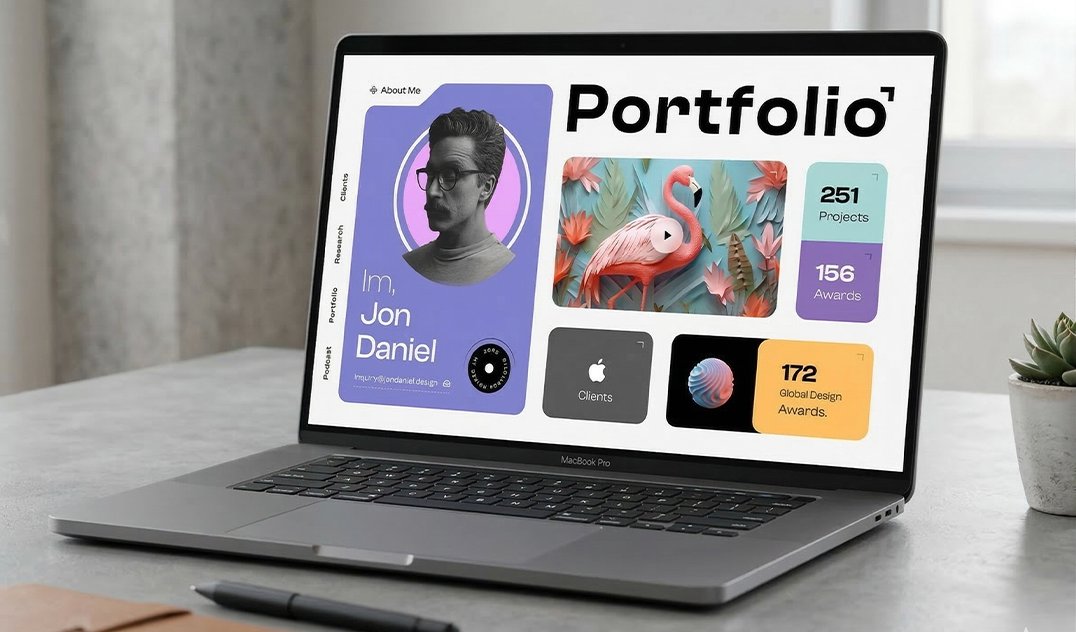
Today, the digital landscape has become hyper-competitive, and a business without a high-performing online presence is essentially invisible. For creative professionals, consultants, and growing startups in Dubai, simply “having a website” is no longer the benchmark for success. To truly thrive, you need a professional portfolio website that does more than just display images; it must function as a 24/7 digital sales engine. 

With a well-architected portfolio, you can bridge the gap between a casual browser and a high-value lead. It establishes immediate brand credibility, showcases your unique problem-solving capabilities, and provides the “social proof” necessary to settle client doubts before they even pick up the phone. At Moonbox, we specialize in transforming static galleries into dynamic lead-generation websites that not only look stunning but also actively drive consistent client inquiries and business growth.

Why a Portfolio Website Is Important for Your Business

A professional portfolio website is the digital headquarters of your brand. In a market as fast-paced as the UAE, potential clients often vet partners online before even initiating a conversation. If your work is not presented with strategic intent, you are leaving money on the table. 

Showcasing Expertise and Authority

A portfolio is not just a list of past jobs; it is a curated exhibition of your expertise. It allows you to demonstrate how you solve problems, rather than just stating what you do. By highlighting complex projects, you can provide a roadmap of your capabilities that speaks directly to your prospects’ pain points. 

Building Trust in a Saturated Market

Trust is the currency of the digital age. For businesses in Dubai and across the UAE, where competition is global, a polished website signals that you are an established, reliable entity. It moves the conversion from “Are they capable?” to “How soon can they start?”

A Digital Representation of Your Brand

Your website is the only platform where you have 100% control over the narrative. Unlike social media profiles, a dedicated portfolio website allows you to wrap your work in a bespoke user experience (UX) that reflects your brand’s luxury, innovation, or technical precision. 

How a Portfolio Website Turns Visitors Into Client Inquiries

The primary goal of a business website that converts visitors is to reduce friction in the buyer’s journey. High-performing agencies design portfolios with a “conversion-first” mindset, using psychological triggers to guide users towards the inquiry form. 

  • Curated Project Selection: You don’t need to show everything you’ve ever done. A strategic portfolio focuses on the type of work you want to attract next. High-quality, high-impact projects create a “halo effect” across your entire brand.
  • Case Study Storytelling: Statistics show that clients are more likely to hire someone who can demonstrate a clear “Before vs. After.” By explaining the challenge, the strategy, and the measurable result, you transform a simple image into a compelling business case, similar to how high-converting landing pages capture attention and drive conversions.
  • Trust Signals: Integrated client logos, industry certifications, and localized Dubai-based awards provide the external validation needed to convert a skeptic into a lead.
  • Strategic CTAs: A visitor shouldn’t have to hunt for a way to contact you. Placing clear, persuasive Calls to Action (CTAs) at the end of every project ensures that when inspiration strikes, the path to inquiry is seamless.

Key Features of a Portfolio Website That Generate Leads

To rank among the best portfolio website builders or agencies in the UAE, a site must master both aesthetics and functionality, which is why many businesses invest in professional web design and development strategies. These are the non-negotiables: 

Clear Project Showcases

Every project should act as a mini-landing page. Use high-resolution images, but back it up with data.

Strong Calls to Action (CTAs)

Your CTAs should be prominent and persuasive. Instead of a generic “Submit,” use action-oriented language:

  • “Book Your Branding Audit”
  • “Request a Custom Quote”
  • “Start Your Project Today”

Client Testimonials

Social proof is the core of brand credibility. In 2026, we recommend using the “Bento Grid” layout to display testimonials, combining text with small video clips to enhance authenticity. 

Mobile-Friendly and Fast Website

With over 70% of UAE web traffic coming from mobile devices, a mobile-responsive website is mandatory. Google’s 2026 algorithms prioritize “Core Web Vitals,” meaning if your site takes longer than 2.5 seconds to load, you are likely losing half your potential inquiries before they even see your work.

Why Businesses Should Invest in Professional Portfolio Website Design

While DIY website builders exist, they often lack the “under-the-hood” optimization needed to rank in competitive markets. To choose professional portfolio website design services, you get a return on investment that a template simply cannot match. 

  • Custom User Experience (UX): Agencies like Moonbox design user journeys, not just pages. We map out exactly where a user’s eye will go, ensuring they hit your “Contact” button at the moment of peak interest.
  • Advanced SEO Integration: Professional designers build with Search Engine Optimization in mind from day one. This includes proper schema markup, optimized image alt text, and a site architecture that helps you rank for terms like “portfolio website design Dubai”.
  • Bilingual Optimization: In the UAE, the ability to switch seamlessly between English and Arabic (with RTL support) is a significant competitive advantage. A professional agency ensures your brand’s “voice” remains consistent in both languages.

Common Mistakes Businesses Make With Their Portfolio Website

Even the most talented creatives can fail to generate inquiries if their website suffers from these common pitfalls:

  • The “Ghost Town” Portfolio: Displaying projects from five years ago suggests your business is stagnant. Freshness is a key signal for both users and search engines.
  • Vague Messaging: If a visitor can’t tell exactly what you do within three seconds of landing on your home page, they will bounce.
  • Hidden Contact Info: Don’t make people go on a scavenger hunt to hire you. Your contact info should appear in the header and footer, and at the end of every case study.
  • Ignoring Local SEO: Many UAE businesses forget to optimize for portfolio website designers. Without geographic SEO (GEO), you’re competing with the whole world instead of winning your local market.

How a Portfolio Website Helps Your Business Generate More Leads

Think of your website as a digital sales funnel. By integrating digital marketing services with a high-end portfolio, you can create a self-sustaining lead engine: 

  1. Attraction (SEO): High-quality, long-form content and case studies rank for long-tail keywords.
  2. Engagement (UX): Beautiful visuals and micro-interactions keep users on the page longer.
  3. Conversion (CRO): Strategic CTAs and trust signals turn that engagement into an inquiry.

When your portfolio is optimized, it doesn’t just show what you’ve done—it sells what you can do. This significantly reduces the sales cycle, as many clients will have already decided to hire you before they even hop on a discovery call.

Build a Portfolio Website That Attracts Clients

Building a website that ranks and converts requires a blend of artistic vision and technical precision. At Moonbox, we don’t just make websites; we engineer digital assets that drive revenue. If you are a consultant looking to establish authority or a startup ready to disrupt the Dubai market, our team combines branding services with advanced web development to ensure your portfolio stands out. 

We focus on:

  • Conversion-focused UI/UX to maximize inquiry rates.
  • SEO-rich site architecture to ensure the right audience finds you.
  • Scalable digital portfolio structures that grow with your business.

Ready to transform your online presence? Book a Consultation with Moonbox today, and let’s build a portfolio that works as hard as you do.

FAQs

  1. What is a professional portfolio website?
    A professional portfolio website is a curated digital space designed to showcase a business or individual’s work, skills, and past success. Unlike a standard website, it focuses heavily on case studies and visual proof to build credibility and encourage potential clients to send an inquiry.
  2. How does a portfolio website help generate client inquiries?It generates inquiries by providing “proof of concept.” By showing potential clients exactly how you solved similar problems for others, you build trust. Combined with strategic CTAs and conversion optimization, it makes the transition from “viewer” to “lead” seamless.
  3. How much does portfolio website design cost in Dubai?
    In 2026, the cost of a high-quality, custom professional portfolio website in Dubai will depend on complexity, page count, and bilingual requirements. Basic template-based sites may cost less, but often lack the SEO power of custom builds.
  4. What should a portfolio website include?
    At a minimum, it should include a high-impact homepage. This “About” section establishes E-E-A-T, a “Services” page, a “Portfolio/Work” section with detailed case studies and client testimonials, and a simplified “Contact” page with a clear lead-capture form.
  5. Should businesses hire professionals for portfolio website design?
    Yes. While DIY tools are accessible, they often lead to slow loading times and poor SEO. Professional portfolio website design services ensure your site is mobile-optimized, secure, and strategically designed to rank on Google and convert visitors into high-paying clients.
Categories
Blogs

How a Website Redesign Can Refresh Your Brand Identity

When Your Website No Longer Feels Like “You.”

There will always be a stage in every growing brand’s journey when the website no longer reflects who the company has become. Perhaps your services have evolved. Or your positioning has matured. You might have entered a new market across Dubai or the wider UAE. Yet your digital presence still communicates the version of your business from three years ago. 

That disconnect is costly.

For most businesses in the UAE, a website is not just a digital brochure; it is the first impression. Within seconds, visitors decide whether your brand feels trustworthy, premium, innovative, or outdated. 

When your design, messaging, and user experience are misaligned with your current brand identity, you risk losing high-value leads, weakening perceived authority, reducing conversion rates, and undermining market investments. 

A website redesign is not only about simple aesthetics. It is a strategic reset, an opportunity to realign your digital presence with your brand’s evolution, ambition, and market positioning. 

What Is a Website Redesign and Why Does It Matter for Branding

A real website redesign can go beyond cosmetic adjustments. There is a difference between a visual and strategic transformation. 

  • A refresh updates colors, fonts, or images.
  • A redesign rethinks structure, messaging, user flow, and brand perception.

Your website is the most visible expression of your brand identity. Layout, typography, spacing, imagery, and micro interactions communicate subtle but powerful psychological messages: 

  • Minimal design suggests confidence.
  • Structured navigation suggests reliability.
  • Premium photography signals quality.
  • Thoughtful UX signals care.

Digital consistency matters. If your social media, physical branding, and marketing campaigns communicate one identity, but your website communicates another, your brand credibility can take a hit. 

For transforming and growing businesses in Dubai’s competitive landscape, consistency across every touchpoint is non-negotiable. 

Key Brand Signals That a Website Redesign Can Fix

Many businesses recognize the need for redesign, but they cannot always articulate the reasons. The signals are often subtle, but powerful. 

  • Outdated Visual Language

Design trends can evolve, so can user expectations. Heavy gradients, dated typography, cluttered layouts, and stock-heavy imagery can subtly signal that the brand is behind the curve, even if the business itself is innovative. 

A redesign will allow you to modernize your visual systems and sync it with contemporary digital standards. 

  • Confusing UX

If users are struggling to find services, pricing, or contact information, the problem is not traffic; it is clarity. Strong UX is not decorative; it is strategic. In fact, effective web design for conversion can play an important role in turning attention into action. A thoughtful redesign improves navigation, simplifies decision-making, and removes friction points. 

  • Misaligned Messaging

Many growing brands can outgrow their original messaging. Your tone, value proposition, and brand story must evolve alongside your positioning. A redesign offers the opportunity to rewrite your narrative, so it resonates with your current audience, not your past one.

  • Performance and Mobile Issues

In the UAE, mobile browsing dominates. If your website loads slowly, doesn’t adapt easily to mobile screens, or feels clunky, your brand credibility can suffer instantly. 

How a Website Redesign Refreshes Your Brand Identity

A strategic redesign can realign your digital experience with your brand values. 

  • Aligning Visual Identity with Brand Values

Your brand values, like innovation, reliability, luxury, and agility, should all be visible in your design choices. Color psychology, typography hierarchy, whitespace, and visual rhythm all can influence how your brand is perceived. 

For example:

  • A luxury brand requires refined spacing and understated visuals.
  • A tech-forward brand benefits from bold contrasts and dynamic layouts.
  • A corporate advisory firm requires structured clarity and cues of trust.

Design communicates before words do.

  • Emotional Design Impact

Emotion can drive decision-making. A thoughtful website redesign can introduce visual storytelling elements that can evoke aspiration, trust, or excitement. Strategic imagery, authentic photography, and confident typography can create emotional resonance. 

  • Professional Credibility

Your website can often serve as due diligence material for investors, partners, and enterprise clients. An outdated design can affect the perceived competence, even if your services are world-class. A polished, performance-optimized site can communicate operational maturity and digital leadership. 

  • UX-Driven Trust

Trust is built through clarity. Clear navigation, transparent calls to action, intuitive forms, and a logical structure reassure users that your business is professional and dependable.

Here is the refined version in clear strategic pointers (keeping the brand-focused, non-generic tone):

Homepage Redesign: Where Brand Perception Begins

Why the Homepage Matters

  • The homepage is the first and most influential brand touchpoint in your digital journey.
  • Users decide within seconds whether your brand feels credible, relevant, and worth exploring.
  • A strategic homepage redesign sets the tone for trust, clarity, and conversion intent.
  • It must instantly communicate:
    • Who you are as a brand
    • What value do you provide?
    • Why are you different?
    • What action should users take next?

Must-Have Elements in a High-Impact Homepage Redesign

Clear Value Proposition

  • A strong headline that communicates relevance immediately
  • Focus on benefits, not abstract taglines
  • Align messaging with your brand positioning

Strategic Visual Hierarchy

  • Use spacing, typography, and layout to guide attention
  • Maintain visual clarity to reinforce brand confidence
  • Avoid clutter that weakens perceived professionalism

Conversion-Focused CTAs

  • Every section should guide users toward a clear next step
  • CTAs should be visible, purposeful, and action-driven
  • Align CTAs with user intent and the decision stage

Trust & Authority Signals

  • Client logos, testimonials, certifications, and metrics
  • Social proof strengthens credibility instantly
  • Reinforces brand reliability and expertise

Common Homepage Redesign Mistakes to Avoid

  • Overloading the page with excessive information
  • Using vague, generic headlines with no clear value
  • Hiding primary CTAs below the fold
  • Ignoring mobile responsiveness and loading performance

Strategic Insight

  • A homepage redesign is not a visual exercise; it is a brand positioning tool.
  • Its true purpose is to direct user perception, guide decisions, and build trust from the first interaction.

The Website Redesign Process: What to Expect

A successful website redesign process is structured and strategic.

  • Discovery & Brand Audit

This stage assesses:

  • Brand positioning
  • Target audience
  • Competitor landscape
  • Performance analytics
  • Conversion bottlenecks

This is where strategy begins.

  • UX/UI Planning

Wireframes are developed to map user journeys. Structure is prioritized before aesthetics. UX defines how users move, and UI defines how it feels.

  • Visual Design & Messaging

Brand identity is translated into a cohesive visual system. Messaging is refined to align with positioning.

  • Development & Testing

Clean code, optimized performance, responsive behavior, SEO structure, and technical integrity are ensured.

  • Launch & Optimization

Post-launch monitoring measures user behavior, engagement, and conversion performance. Iteration follows insight. A Website Redesign is never a one-day transformation; it is a strategic rollout.

Website Relaunch: Turning Your Redesign into a Brand Moment

A website relaunch should never be done quietly. It is more than a technical update; it is a strategic opportunity to signal your brand’s transformation to the market. When executed thoughtfully, a relaunch can communicate progress, confidence, and forward momentum. It can tell your audience that your business is growing, adapting, and investing in delivering better experiences. 

Many brands will underestimate the impact of announcing a redesign. A strategic website relaunch can reinforce a new brand positioning, reintroduce updated services, and create valuable visibility opportunities. It can also help reconnect with existing customers by showing them how your brand has transformed to better meet their requirements. 

To maximize the impact of a website relaunch, businesses should actively communicate the transformation. This may include announcing the relaunch through social media campaigns, sending personalized updates to existing clients, publishing thought-leadership content on the redesign journey, and sharing behind-the-scenes insights into the strategy and development process.

When approached strategically, a relaunch reframes a website redesign as a milestone in brand growth rather than just a design update. It can transform a technical change into a more powerful brand statement, strengthening credibility, engagement, and market presence. 

Choosing the Right Website Redesign Services

Not all website redesign services are strategic. Some agencies focus purely on visual aesthetics. Others understand brand architecture, UX psychology, and conversion strategy.

When evaluating partners, consider:

  • Do they begin with brand strategy?
  • Do they understand user behavior?
  • Do they connect design to business outcomes?
  • Do they have experience with rebranding initiatives?

If your redesign accompanies a broader brand evolution, consider agencies offering comprehensive rebranding services in Dubai to ensure alignment between brand identity and digital execution. As a branding-led digital agency, Moonbox stands out as a strategic partner for website redesign, combining brand insight, UX expertise, and performance-driven development to deliver digital experiences that strengthen identity and drive long-term growth.

WordPress Website Redesign: Flexible, Scalable, Brand-Friendly

For many UAE businesses, a WordPress website redesign offers flexibility and scalability.

Why WordPress?

  • Custom theme capabilities
  • SEO-friendly structure
  • Scalable architecture
  • Easy content management

Unlike rigid template systems, WordPress allows complete control over branding and UX customization.

Custom themes ensure your brand identity is not constrained by pre-built layouts. Strategic development enhances performance, improves site speed, and strengthens search visibility.

WordPress also supports long-term growth, from blog expansion to landing page campaigns.

How to Know Your Website Redesign Is Working

A successful redesign should produce measurable outcomes.

Engagement Metrics

  • Reduced bounce rates
  • Increased time on site
  • Higher page depth

UX Improvements

  • Improved navigation flow
  • Faster load speeds
  • Better mobile engagement

SEO Signals

  • Improved keyword rankings
  • Increased organic traffic
  • Enhanced indexing performance

Conversion Growth

  • More inquiries
  • Higher lead quality
  • Increased sales

Customer Feedback

Clients often comment when a website feels elevated. Perception changes precede performance gains. A redesign is successful when users feel the difference and data confirms it.

Is It Time to Redesign Your Website?

Ask yourself:

  • Does your website reflect your current positioning?
  • Does it communicate your value clearly?
  • Does it feel premium, trustworthy, and modern?
  • Is it optimized for performance and conversion?
  • Would you confidently send a major investor to it?

If you have hesitations, it may be the right time. A website redesign is not a cost; it is a strategic investment in perception, authority, and growth. In a market as competitive as Dubai, your digital presence is often the deciding factor between inquiry and exit.

When approached with a strategy, a redesign does more than just a visual update. It refreshes identity, strengthens credibility, and positions your brand for the next stage of growth. 

For businesses ready to align branding, UX, and performance into a cohesive digital experience, the opportunity is not just to redesign, but to redefine how your brand is experienced online.

Ready to transform your website into a powerful brand asset? Connect with Moonbox to explore how a strategic website redesign can elevate your digital presence and drive meaningful business results.


FAQs

  1. What is a website redesign, and why is it important for branding?
    A website redesign is the process of updating a website’s structure, visuals, messaging, and user experience to sync with a brand’s current identity and business goals. It is really important because a modern, well-designed website can strengthen credibility, improve user trust, and ensure consistent brand positioning across digital platforms. 
  2. When should a business consider a website redesign?
    Businesses should consider a website redesign when their websites look outdated, do not reflect current services, perform poorly on mobile devices, or no longer align with their brand positioning. Declining engagement, low conversion rates, and inconsistent messaging are also stronger indicators that a redesign is needed. 
  3. How does a website redesign improve brand identity?
    A website redesign can improve brand identity by aligning visual elements, messaging, and the user experience with a company’s values and positioning. Updated typography, color systems, layouts, and UX design can help create stronger emotional connections, reinforce professionalism, and also build customer trust. 
  4. What is included in a typical website redesign process?
    A standard website redesign process includes brand and UX discovery, content and messaging alignment, visual design planning, development and performance optimization, and post-launch monitoring. This structured approach can ensure the redesign supports both brand strategy and business goals. 
  5. How long does a website redesign usually take?
    The timeline for a Website Redesign depends on project complexity, but most strategic redesigns typically take between 6 and 12 weeks. This includes research, design, development, testing, and launch preparation to ensure a seamless website relaunch.
icon