
Every business owner needs the same thing: consistent growth, reliable revenue, and a stream of loyal customers. To achieve this, you will need to invest your hard-earned money into paid ads, SEO, and social media campaigns. But what really happens when the clicks don’t turn into conversions? What happens when your ad budget runs dry, and lead flow completely freezes?
If your marketing isn’t converting, branding might be the problem.
Many growing businesses would find themselves trapped in an expensive, endless loop of buying traffic that doesn’t stick. The main issue is a fundamental confusion between two distinct business engines. While they are often thrown together in boardroom conversations, they serve entirely different masters.
Understanding the relationship between branding vs. marketing is what separates market leaders from companies that get stuck in brutal price wars. In this blog, we will break down why these engines matter, how they diverge, and how to use them together to scale your business sustainably.
Branding vs. Marketing — Why Most Businesses Get It Wrong
The simplest way to understand the dynamic is this: marketing gets attention, but branding builds the relationship.
Businesses falter when they launch aggressive customer acquisition campaigns before defining exactly who they are. Marketing drives immediate, short-term transactions, while branding creates the long-term emotional connection, equity, and unprompted recall that make a business sustainable. This is exactly why branding is different from marketing: one builds long-term perception, while the other drives immediate action.
The Fundamental Differences
To stop spending money on misaligned campaigns, you will need to understand exactly where each discipline begins and ends.
Marketing: What You Say (The Action)
Marketing is the short-term, tactical engine that promotes products, generates leads, and drives sales velocity.
- The Focus: Reaching the right target audience, driving high-intent traffic, and closing immediate conversions.
- The Tactics: Paid advertising (PPC), search engine optimization (SEO), seasonal email campaigns, and promotional events.
- The Goal: Renting space in a consumer’s feed or search results and compelling them to take immediate action.
Branding: What They Remember (The Identity)
Branding is the long-term, foundational identity of your business. It is the emotional framework and reputation that will stay with a consumer long after a specific marketing campaign concludes.
- The Focus: Clarifying your mission, core values, distinctive tone of voice, and competitive differentiation.
- The Components: Your narrative, visual identity (logos, typography, color palettes), customer service standards, and the gut feeling people experience when they hear your company name.
- The Goal: Cultivating deep trust and creating brand advocates who buy repeatedly without needing an aggressive sales pitch.
Why Most Businesses Get It Wrong
The most common and expensive mistake business owners make is putting marketing before branding.
Marketing is an amplifier; it takes your core message and blasts it to the world. If your message is fuzzy, inconsistent, or lacks a unique value proposition, marketing will simply spread that confusion faster. You end up paying top dollar to broadcast expensive noise.
- Chasing Rented Attention: Relying solely on paid ads means your business is only visible while your credit card is being charged. The moment your ad budget pauses, your customer flow drops to zero.
- Treating Branding Like a Simple Logo Design: Branding is an overarching business strategy, not a quick graphic design project. Without a defined brand strategy, you will inevitably end up competing purely on features and low prices.
- Fixing Brand Problems with Ad Spend: You cannot use aggressive marketing tactics to fix a fundamentally weak reputation or a forgettable value proposition.
What is Branding (And Why It Drives Conversions)
Branding is the strategic process of deliberately shaping how the public perceives and experiences your business. While many view it as a creative exercise, a well-crafted brand is actually a powerful financial driver. It establishes a psychological connection with your audience that directly impacts your bottom line.
Here is exactly how robust branding improves your conversions and transforms passive web traffic into high-value buyers:
Builds Immediate Trust
Consumers are rarely opening their wallets for businesses they don’t trust. Consistent, highly professional branding signals competence, reliability, and established authority. When your messaging syncs easily with your polished visual identity, it can eliminate buyers’ hesitation.
Creates Emotional Resonance
Human beings buy based on their emotions and justify their decision with logic. Effective branding can speak clearly and communicate compelling stories, too. When a target customer connects with your mission, they stop viewing you as a vendor and start seeing you as a partner.
Elevates Perceived Value
Premium branding creates an expectation of premium outcomes. If your business looks, feels, and communicates at a high level of quality, you naturally justify a higher price point. This shifts the conversation away from being the cheapest option to being the most compelling choice.
Simplifies Decision-Making
The modern marketplace is increasingly noisy, but with a strong brand, you can cut through the clutter. When you maintain a highly recognizable presence, your business becomes the default choice when a customer is ready to buy, drastically shortening your sales cycles.
Cultivates Customer Loyalty
Conversions shouldn’t be treated as one-time wins; they should be used to build customer lifetime value (LTV). When your operations consistently deliver on your brand promise, casual buyers turn into lifelong advocates who voluntarily defend and refer to your business.
What is Marketing (And Why It Fails Without Branding)
Marketing is the tactical deployment of channels and messages to push a product or service to market. It uses tools such as Meta ads, Google PPC, and automated email flows to capture immediate market attention.
To see why marketing fails when it lacks a brand foundation, let’s look at the interplay between the two. If branding is who you are (your character, values, and story), then marketing is how you show up to the party (the clothes you wear, the jokes you tell, and the way you introduce yourself).
When you attempt to run marketing campaigns without an underlying brand strategy, your business encounters severe limitations:
- It lacks an Emotional Hook: Marketing explains what you sell, but branding explains why they should care. Without that emotional anchor, your offer becomes a commoditized line item competing solely on price.
- It Becomes an Inefficient Cost Center: Think of marketing as renting attention, while branding is owning it. If you lack a memorable brand identity, your customer acquisition cost (CAC) will remain unsustainably high because you have to pay to re-acquire the same audience over and over.
- It Causes Inconsistent Messaging: Without clear brand guidelines, your marketing campaigns will quickly feel scattered across different channels. An ad might promise one experience, but if your website delivers another, users will instantly bounce.
Ultimately, branding gives your marketing direction, while marketing gives your branding reach.
Branding vs. Marketing Strategy — The Real Difference
To execute a strategy that yields real returns, you need to understand how these concepts operate on different timelines and focus areas.
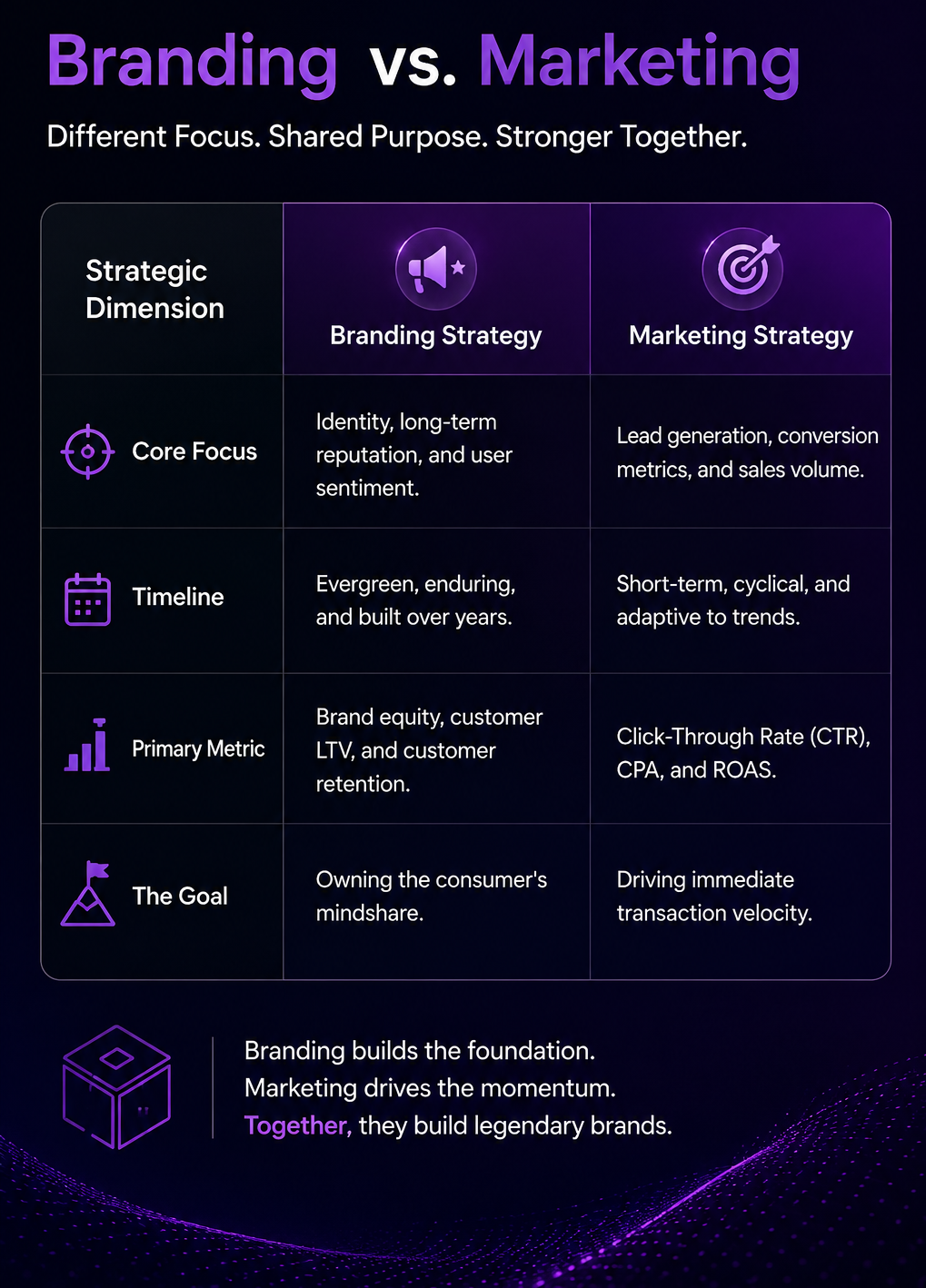
The “Real Difference” in Action
Let’s look at a practical example of how this plays out in a competitive landscape like Dubai:
- The Branding: This is the physical and emotional experience of a boutique café in the Dubai Design District. It’s the minimalist concrete interior, the signature aroma of ethically sourced single-origin beans, the sustainable packaging, and the quiet, productive environment that draw creative professionals back every morning.
- The Marketing: This includes the targeted Instagram ad offering a “Buy One, Get One” promotion on iced lattes during the summer heat, local SEO that puts the café at the top of Google Maps, and the email newsletter sent to subscribers highlighting a special Ramadan menu.
Marketing brings the foot traffic through the door for the first time, but the branding is the exact reason those customers become regulars.
Branding vs. Advertising vs. Marketing (Quick Breakdown)
To map out your business growth accurately, it helps to view your commercial efforts as a three-step engine: Branding, Marketing, and Advertising. Understanding branding, advertising, and marketing gives businesses a clearer framework for building awareness, generating demand, and increasing customer loyalty simultaneously.
Branding: The Identity
Branding is the soul and emotional foundation of your business. If your company were a person, the brand would be their core personality, values, character, and distinctive style.
- Primary Goal: Build unshakeable trust and long-term customer alignment.
- Key Components: Vision, brand voice, core values, and visual guidelines.
Marketing: The Strategy
Marketing is the comprehensive blueprint for studying customer behavior, positioning your product, and aligning your commercial efforts. It can act as the vehicle that carries your brand in the right direction.
- Primary Goal: Build sustainable market interest and pipeline.
- Key Components: Competitor analysis, audience segmentation, content strategy, and pricing models.
Advertising: The Distribution
Advertising is a highly tactical, paid subset of marketing. It is the literal volume knob on your megaphone, ensuring your strategically packaged brand message reaches a large, targeted audience quickly.
- Primary Goal: Drive immediate visibility, capture leads, and close sales.
- Key Components: Google Search ads, Meta campaigns, programmatic displays, and outdoor billboards.
Which is More Important — Branding or Marketing?
When forced to choose where to invest first, many business owners struggle. However, from a purely business standpoint, the verdict is definitive: Branding must come first.
You cannot market a product effectively if you haven’t defined what the product stands for, who it serves, and why it matters. Marketing without branding is a recipe for high ad spend and low retention. Conversely, building a beautiful brand without marketing means you remain a well-kept secret.
The Golden Rule of Business Growth: You build your brand platform first to establish your identity, value proposition, and trust signals. Then, you deploy data-driven marketing campaigns to amplify that identity, scale your reach, and monetize your position.
The Real Cost of Ignoring Branding
When you treat branding as an afterthought, your business pays a silent, ongoing tax across all your operations:
- Anemic Conversion Rates: You can drive thousands of clicks to your landing pages, but if your site lacks a clear message, authoritative trust indicators, and a cohesive identity, those visitors will leave without making a purchase.
- Skyrocketing Customer Acquisition Costs (CAC): When you fail to build organic brand equity and top-of-mind recall, you are forced to pay tech platforms for every single lead. This erodes your profit margins over time.
- Zero Competitive Moat: Without a distinct brand personality, you become a commodity. If a competitor emerges with a slightly lower price or a larger ad budget, your customer base will abandon you overnight because there is no emotional friction keeping them tied to your business.
When to Hire a Branding Agency
Recognizing when your internal team has reached its limits is vital for scaling. Knowing when to hire a branding agency can prevent wasted marketing spend and help businesses establish a stronger market position before scaling campaigns.
It is time to partner with a specialized branding agency if you experience any of the following indicators:
- Your Marketing Metrics are Sinking: You are hitting your target impression and click goals, but your actual sales conversions remain stagnant.
- Your Internal Identity Feels Fragmented: Your sales team uses one pitch, your website conveys another message, and your social media channels seem to belong to an entirely different company.
- You Are Scaling or Repositioning: You are entering a premium market tier, raising venture capital, or launching an entirely new vertical that requires absolute clarity from day one.
How Brand Strategy Consulting Drives Business Growth
A specialized brand strategy consultant doesn’t just hand you a new color palette; they realign your business for market dominance.
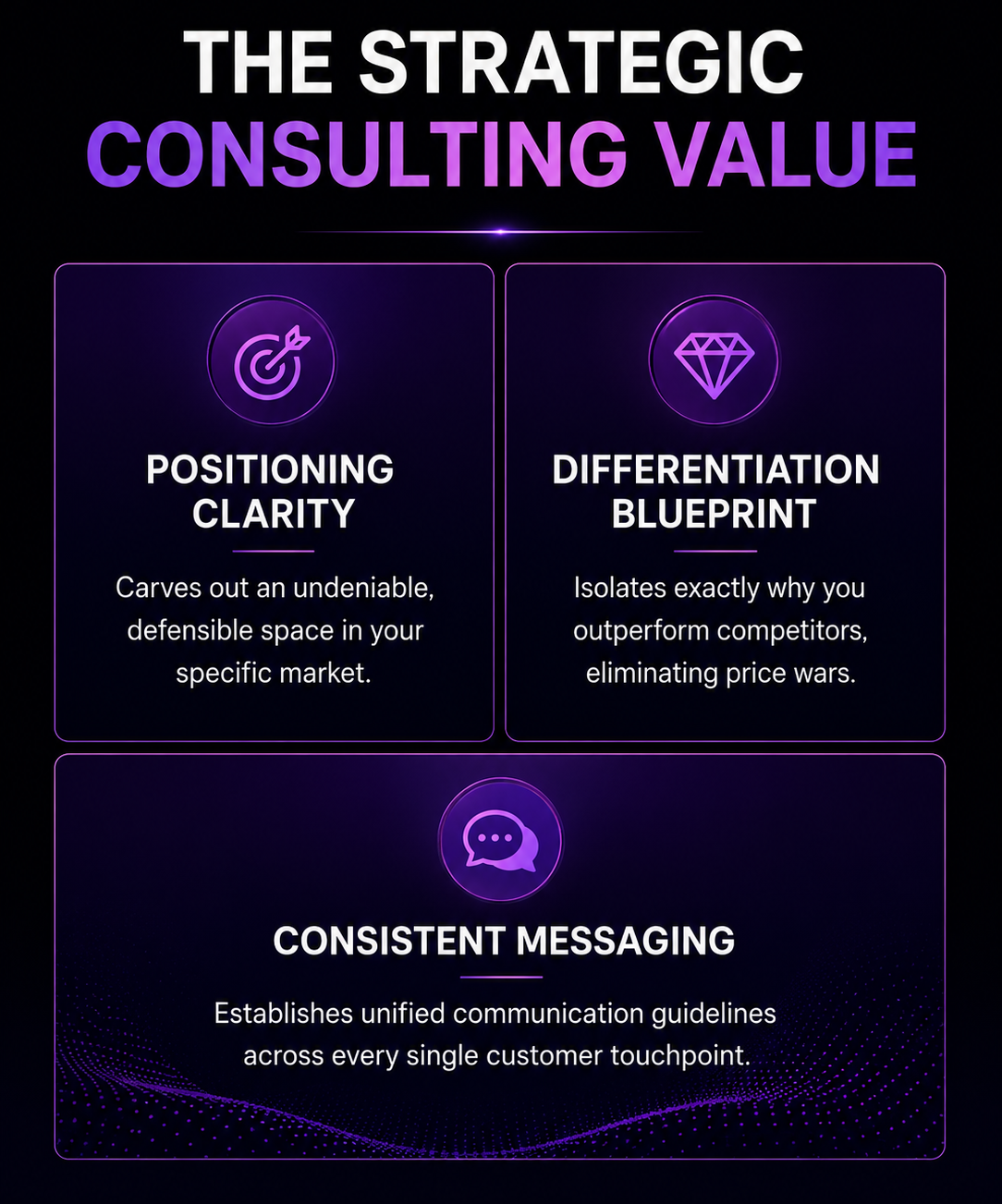
By laying this corporate foundation, brand consulting makes every single dollar you spend on future marketing campaigns work twice as hard. It turns cold traffic into immediate brand recognition.
Why Businesses That Invest in Branding Win Faster
When your market presence is clear, authoritative, and distinctive, your marketing campaigns stop pushing a commodity and start offering entry into an aspirational ecosystem.
Ready to Fix Your Foundation?
In the Branding vs. Marketing debate, the most successful businesses understand that marketing brings traffic through the front door, while branding converts visitors into loyal customers. If you are ready to stop chasing rented attention and start building a real market asset, it’s time to realign your strategy.
Build a Strategy That Converts: If your current marketing efforts aren’t delivering the returns you need, it’s time to fix your strategic foundation. Work with a branding expert today to unlock sustainable, long-term business growth.
FAQs
- What is the difference between branding and marketing for small businesses?
For a small business, marketing involves the immediate, day-to-day actions you take to find customers—such as running local social media ads, sending discount emails, or optimizing for local search. Branding is the long-term foundation that defines who you are, your reputation, your core values, and your visual style. Marketing gets a customer to make their first purchase, while branding ensures they stay loyal to your business over the long run. - Why is branding considered more important than marketing when launching a new business?
Branding takes priority because it establishes your corporate identity, distinct market positioning, and core customer promise. If you launch marketing campaigns without clear branding, you are driving traffic to an undefined offer. Defining your brand strategy first ensures that every dollar you invest in advertising or SEO successfully communicates a memorable, high-converting message. - How do branding, marketing vs advertising strategies work together?
These three elements operate as a unified growth engine. Branding defines your identity, message, and target emotional impact. Marketing builds the comprehensive commercial strategy, pricing models, and channel roadmaps to find your market. Advertising serves as a paid distribution channel that amplifies the message, using platforms like Google PPC or social ads to drive rapid visibility and lead conversion. - When should a scaling company hire a branding agency vs a marketing agency?
You should hire a branding agency when your corporate identity feels inconsistent, your marketing clicks aren’t converting into sales, or you need to reposition your company for a premium market tier. You should partner with a marketing agency when your brand foundation is already rock-solid, and you need a team to execute ongoing, tactical lead-generation campaigns, such as paid ads, SEO management, or active social media distribution. - How can a business owner measure the return on investment of brand strategy consulting?
While marketing ROI is tracked through real-time metrics such as CTR and ROAS, brand strategy consulting is measured by long-term business health indicators. Success is reflected in increased customer lifetime value (LTV), lower customer acquisition cost (CAC) over time, improved conversion rates on your paid campaigns, and increased unprompted brand recall within your target industry.