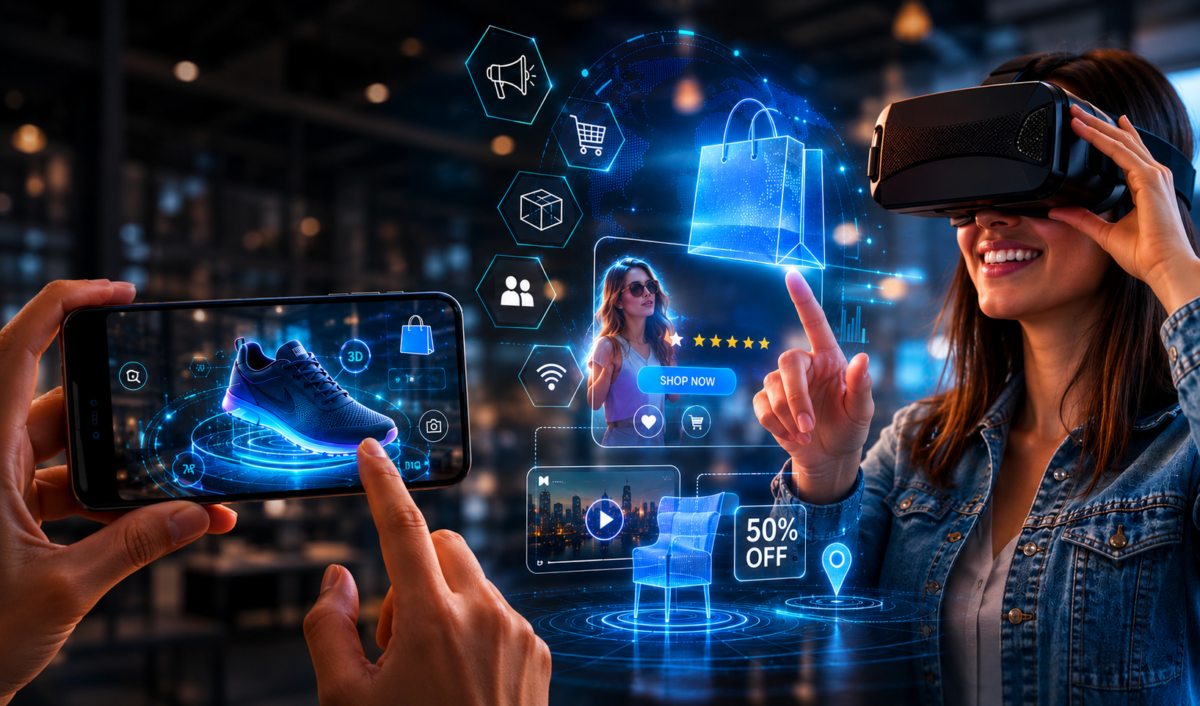
Digital marketing is evolving faster than ever, and brands are constantly looking for new ways to capture attention in an increasingly competitive market. In this transformation, augmented reality in branding is emerging as one of the most powerful technologies shaping the future of customer engagement.
From immersive shopping experiences to interactive social media campaigns, augmented reality is redefining how businesses connect with audiences. In a forward-thinking market like Dubai, brands are rapidly adopting AR technology to create memorable customer experiences, strengthen brand recall, and improve conversions.
As consumer expectations continue to rise, the future of augmented reality marketing is no longer optional — it is becoming a competitive necessity.
How Augmented Reality Is Transforming Brand Experiences in Dubai
Dubai has always been at the forefront of digital innovation. With consumers increasingly seeking immersive and personalized experiences, businesses across retail, hospitality, real estate, fashion, and ecommerce are investing heavily in augmented reality marketing strategies.
Unlike traditional advertising, AR allows customers to actively interact with a brand rather than simply viewing static content. This creates stronger emotional connections and improves customer engagement.
Today, brands in Dubai are using AR to:
- Deliver immersive showroom experiences
- Create interactive brand storytelling campaigns
- Launch virtual product demonstrations
- Enhance social media engagement
- Improve online shopping experiences
For modern businesses, AR is becoming an essential part of building future-ready digital experiences.
Why Brands Are Investing in AR Marketing Campaigns in 2026
The global shift toward immersive technology is accelerating rapidly. Businesses are moving marketing budgets toward AR because it creates deeper customer interaction and significantly higher engagement rates.
The Growth of AR in Advertising
The accessibility of smartphones and WebAR technology has made immersive experiences easier to deploy than ever before. Customers no longer need expensive devices to experience AR-powered content.
This has opened new opportunities for brands to create:
- Interactive advertising campaigns
- Immersive ecommerce experiences
- Social media AR filters
- Real-time product visualizations
As a result, augmented reality advertising is becoming one of the fastest-growing segments in digital marketing.
Consumer Behavior Is Changing
Modern consumers expect more than traditional advertisements. They want experiences that are interactive, personalized, and engaging.
Instead of simply viewing a product, customers now want to:
- Try products virtually
- Visualize products in real-world environments
- Interact with branded experiences
- Share immersive content on social media
This shift is fundamentally changing how brands communicate with audiences.
The Role of AR in Creating Interactive Customer Experiences
One of the biggest advantages of augmented reality in branding is its ability to transform passive audiences into active participants.
Virtual Try-On Technology
Fashion, beauty, eyewear, and jewelry brands are using AR-powered virtual try-ons to improve online shopping confidence and increase conversions.
Customers can preview products in real time before making purchasing decisions, reducing uncertainty and improving satisfaction.
Interactive Packaging Experiences
AR-enabled packaging is transforming traditional product experiences into engaging digital interactions.
By scanning packaging with smartphones, customers can unlock:
- Product tutorials
- Interactive storytelling
- Promotional campaigns
- Exclusive brand experiences
This creates stronger customer engagement while improving brand recall.
AR Product Demonstrations
Instead of relying on static visuals, brands can now create immersive product experiences that allow customers to explore products interactively.
This is especially valuable for:
- Real estate developers
- Furniture brands
- Automotive companies
- Luxury retailers
AR vs Traditional Advertising: What Modern Brands Need in 2026
Traditional advertising methods are becoming less effective as customer attention spans continue to shrink.
AR, on the other hand, creates highly engaging experiences that encourage participation and interaction.
Higher Engagement Rates
Unlike static ads, AR campaigns encourage users to actively interact with content, leading to:
- Longer engagement durations
- Better customer participation
- Increased interaction rates
Improved Social Sharing
Immersive experiences naturally encourage users to share content online. This increases:
- Organic reach
- User-generated content
- Brand visibility
Stronger Brand Recall
Interactive experiences are significantly more memorable than traditional advertisements. Customers are more likely to remember brands that provide immersive and engaging experiences.
This helps businesses build stronger emotional connections with their audiences.
How Luxury Brands in Dubai Are Using AR for Customer Engagement
Luxury brands in Dubai are among the early adopters of immersive marketing technologies.
Real Estate and Property Experiences
Real estate companies are using AR to offer virtual property tours and interactive apartment visualizations, helping buyers explore spaces remotely.
Fashion and Jewelry Brands
Luxury fashion and jewelry brands are implementing virtual try-on experiences to create premium digital shopping journeys.
Hospitality and Tourism
Hotels and resorts are using AR-powered experiences to showcase rooms, amenities, and destinations before customers book their stay.
These immersive strategies help premium brands deliver exceptional customer experiences while differentiating themselves in competitive markets.
The Future of Ecommerce: How AR Improves Online Shopping Experiences
Ecommerce brands are rapidly adopting AR to bridge the gap between physical and online shopping.
Virtual Product Visualization
Customers can place products virtually within their real-world environments before purchasing.
This is especially useful for:
- Furniture retailers
- Home décor brands
- Interior design businesses
Fashion Try-On Experiences
AR-powered try-ons allow users to digitally test products before purchasing, creating more confidence in online buying decisions.
Reduced Product Returns
One of the biggest benefits of AR ecommerce experiences is lower return rates. Customers gain a better understanding of product size, fit, and appearance before placing orders.
This improves customer satisfaction while reducing operational costs.
Top Augmented Reality Trends Brands Should Watch in 2026
As immersive technology continues to evolve, brands need to stay ahead of emerging trends.
AI + AR Integration
Artificial intelligence is enhancing AR experiences by delivering smarter personalization and customer interactions.
Web AR Experiences
WebAR technology removes the need for app downloads, making immersive experiences more accessible across all devices.
AR in Social Commerce
Social platforms are increasingly integrating shopping experiences into AR-powered content formats.
Metaverse Branding
Brands are exploring virtual environments and immersive digital experiences to engage audiences in entirely new ways.
Spatial Computing
The future of immersive technology will combine physical and digital interactions seamlessly through spatial computing innovations.
How AR Branding Increases Customer Engagement and Brand Recall
Businesses investing in custom AR experiences for brands are seeing measurable improvements in customer engagement metrics.
Increased Customer Interaction
AR experiences encourage users to actively participate with branded content rather than passively consuming advertisements.
Better Emotional Connection
Immersive experiences create stronger emotional responses, helping customers feel more connected to brands.
Longer Attention Spans
Customers spend significantly more time engaging with interactive content compared to traditional advertisements.
Higher Social Media Engagement
Creative AR campaigns encourage users to share experiences online, improving brand awareness organically.
How Businesses Can Start Using AR in Their Marketing Strategy
For businesses looking to adopt AR technology, the best approach is to start with customer experience goals.
Understand Customer Needs
Identify areas where AR can improve engagement, simplify decision-making, or create interactive experiences.
Choose the Right AR Solution
Brands can begin with:
- Social media AR filters
- Virtual try-ons
- Product visualizations
- Interactive marketing campaigns
Focus on User Experience
A successful AR campaign depends heavily on intuitive UI/UX design and seamless customer interaction.
Partner with an Experienced Digital Agency
Working with an experienced branding and technology partner ensures that AR campaigns are strategically aligned with business goals.
The Future of Social Media Marketing with AR Filters and Immersive Content
Social media is playing a major role in accelerating AR adoption.
Platforms like Instagram, TikTok, and Snapchat are transforming customer engagement through:
- Interactive AR filters
- Immersive advertising campaigns
- User-generated branded content
- Social commerce experiences
These experiences increase visibility, encourage participation, and improve brand engagement organically.
Why Businesses Should Invest in AR Now
The future of branding is immersive, interactive, and experience-driven. Businesses that adopt AR early will be better positioned to capture customer attention and stay ahead of evolving digital trends.
From ecommerce and retail to social media and luxury branding, augmented reality branding services are reshaping how businesses communicate with audiences.
As Dubai continues to lead digital innovation in the region, brands investing in AR today will define the future of customer engagement tomorrow.
Build Immersive Brand Experiences with Moonbox
At Moonbox, we help businesses create future-ready digital experiences through innovative branding, UI/UX design, mobile app development, and immersive technologies.
Whether you want to launch interactive campaigns, improve ecommerce engagement, or create memorable customer experiences, our team delivers custom digital solutions designed for modern brands.
Our Expertise Includes:
- Branding and creative strategy
- UI/UX design services
- Mobile app development
- Ecommerce experiences
- Interactive marketing solutions
- Custom AR experiences for brands
Future-Proof Your Brand with Immersive Technology
The future of marketing belongs to brands that create experiences — not just advertisements.
Partner with Moonbox to transform customer engagement through innovative digital experiences and immersive AR-powered solutions.
FAQs
- What is augmented reality in branding?
Augmented reality in branding uses interactive digital experiences to engage customers through smartphones and AR-enabled devices. - How is AR changing marketing?
AR makes marketing more interactive by offering immersive experiences like virtual try-ons, AR filters, and product visualizations.
- Why are brands investing in AR marketing?
Brands invest in AR marketing to improve customer engagement, increase brand recall, and create memorable experiences.
- Which industries benefit from AR branding?
Retail, ecommerce, real estate, fashion, hospitality, and luxury brands benefit the most from AR experiences.
- How does AR improve ecommerce?
AR helps customers visualize products before purchasing, improving buying confidence and reducing return rates.